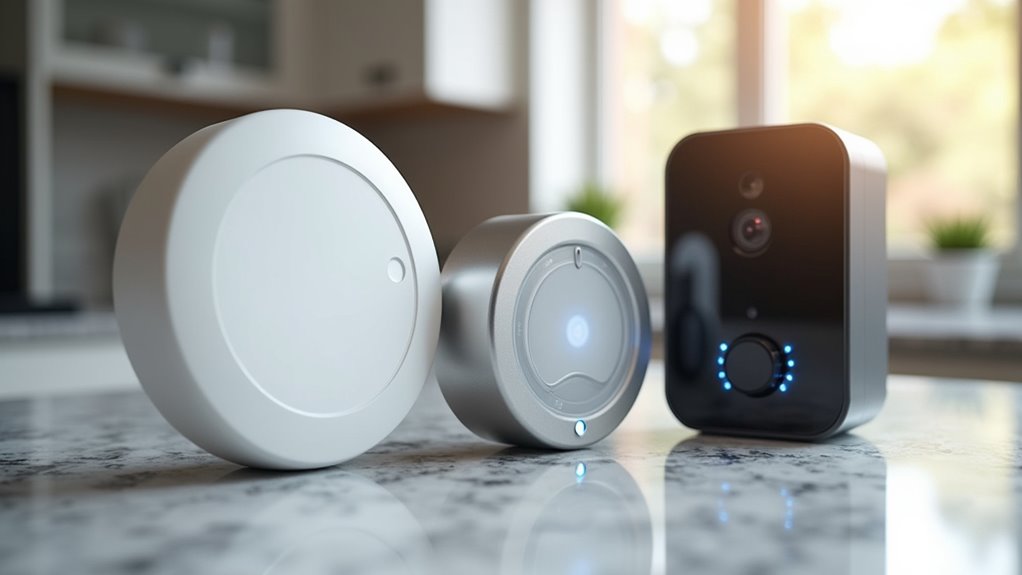

While homeowners shell out thousands annually for insurance premiums, many don’t realize their smart gadgets could actually cut those costs. The irony? Most people never bother installing the devices that could save them serious money.
Smart smoke and carbon monoxide detectors top the list for premium reductions, offering 8-10% discounts on average. These devices alert homeowners and emergency services faster, which means fewer devastating fire claims. Some insurers hand out $100 or more in annual savings for these gadgets alone. But here’s the catch—additional detectors of the same type won’t stack discounts.
Smart smoke detectors deliver up to 10% insurance savings, but installing multiple units won’t multiply your discount.
Water leak detection systems and smart shutoff valves deliver 7-9% premium cuts by preventing costly water damage claims. Insurers love these proactive devices, especially in freeze-prone areas where burst pipes wreak havoc. Real-time monitoring data also speeds up claims processing when disasters do strike.
Professional security systems pack the biggest punch, slashing premiums by 5-20% depending on the setup. Security cameras and video doorbells typically score 5-7% discounts, while professionally monitored alarm systems yield higher savings. The key word? Professional monitoring. Many insurers require proof of monitoring services to qualify for discounted rates. Wired security systems offer enhanced security measures compared to wireless alternatives since they cannot be compromised by signal jamming.
Smart locks contribute 3-5% premium reductions by cutting unauthorized entry risks. Their access logs provide valuable data for claim verification too. Smart lighting systems offer similar 3-5% savings by deterring burglaries, particularly when properties sit empty.
Device bundles integrated with comprehensive smart home systems can maximize savings up to 20%. But compatibility matters—many insurers only offer discounts for verified, approved devices that meet their policy requirements. Smart home systems must maintain a minimum bandwidth of 2-5 Mbps to qualify for most insurance discount programs.
The frustrating reality? Discount criteria vary wildly by insurer, location, and risk profile. Some providers cap total discount percentages even for fully integrated systems. Others demand proof of installation, ongoing monitoring certificates, or updated documentation to maintain eligibility. Homeowners should compare quotes to see if smart device savings truly offset the hardware and installation costs.
Most homeowners skip these money-saving installations entirely, missing out on hundreds in annual premium reductions. The devices that could slash insurance costs sit unpurchased while premiums continue climbing year after year.


